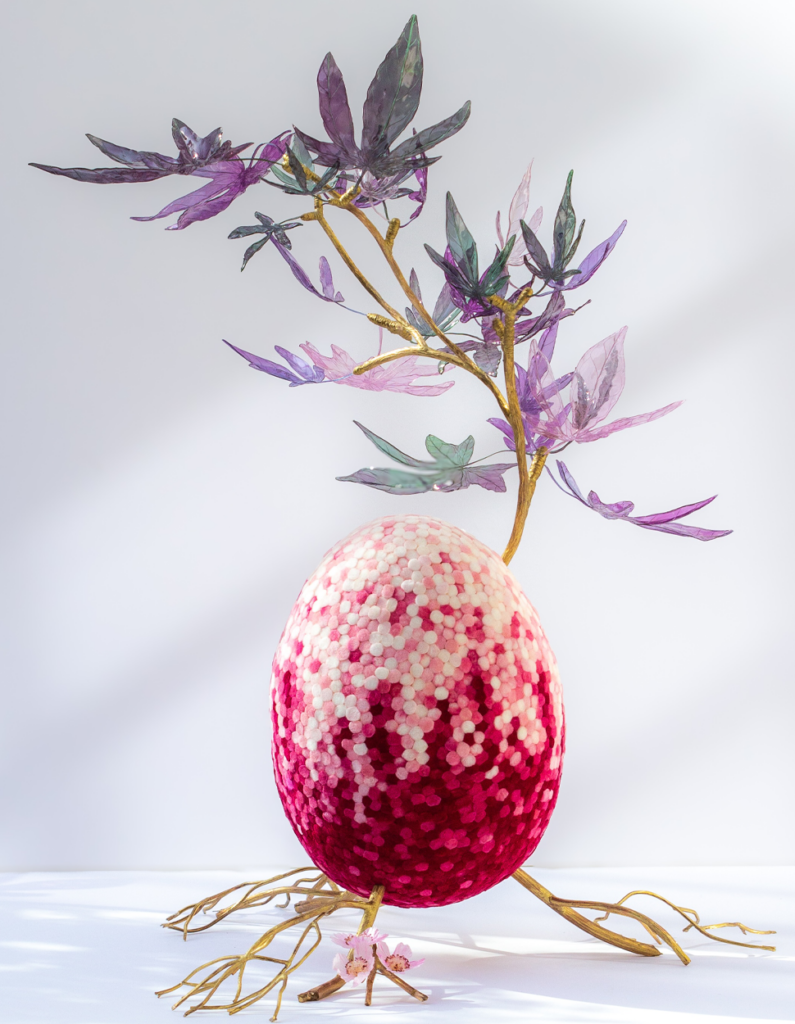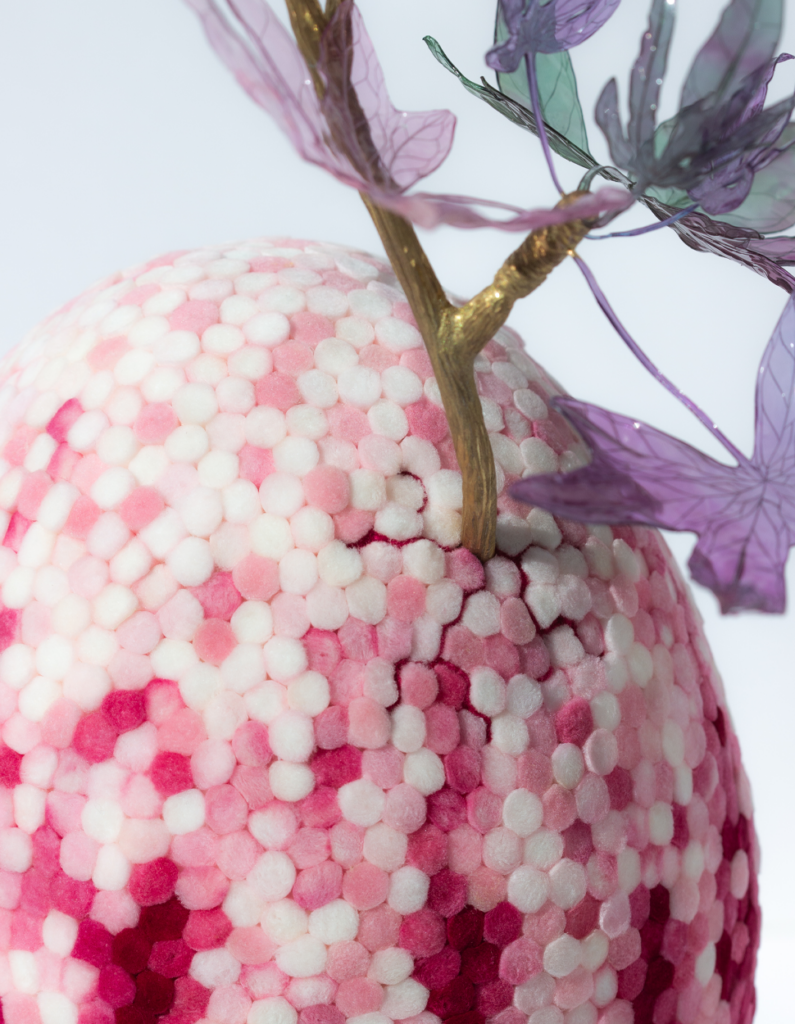

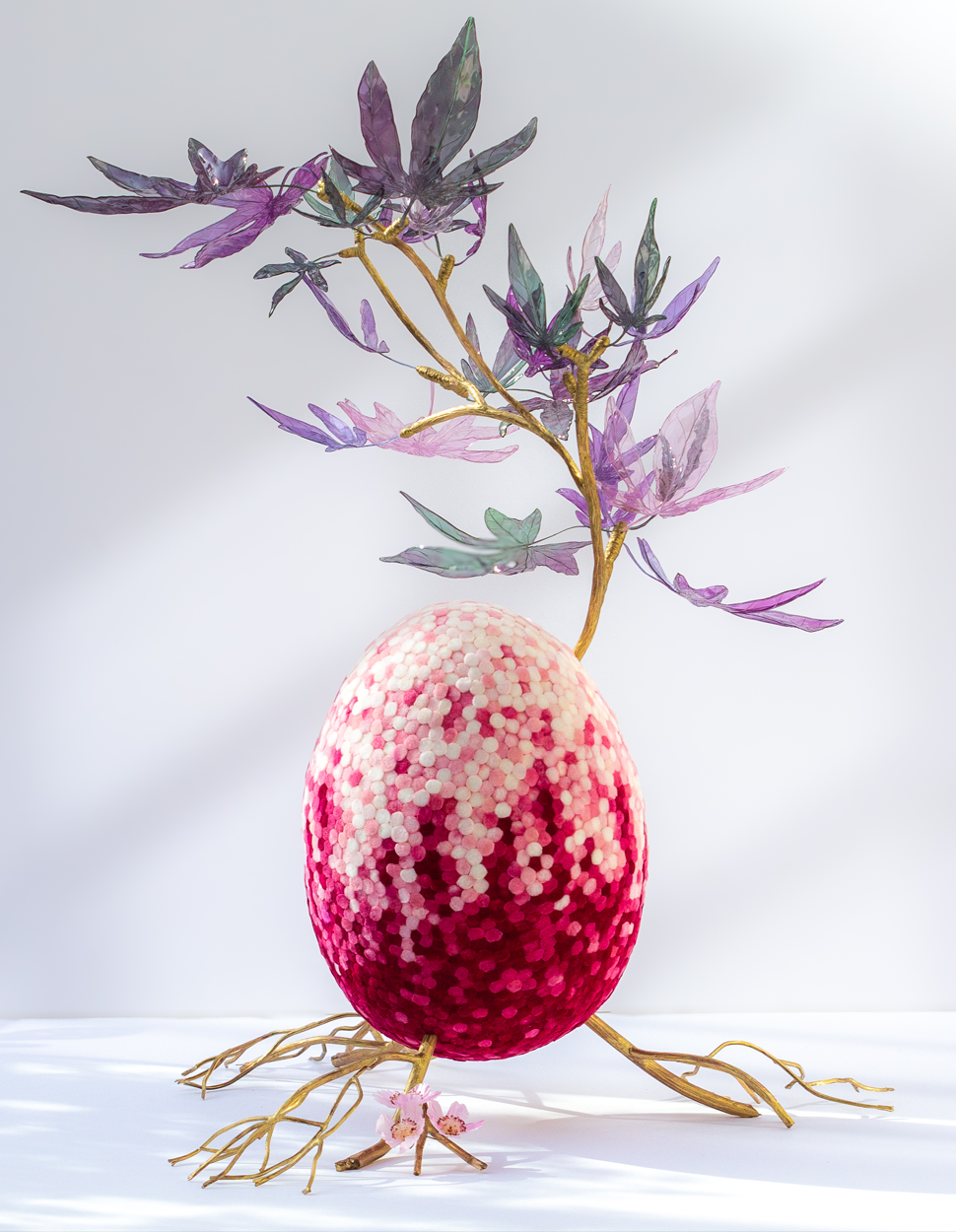
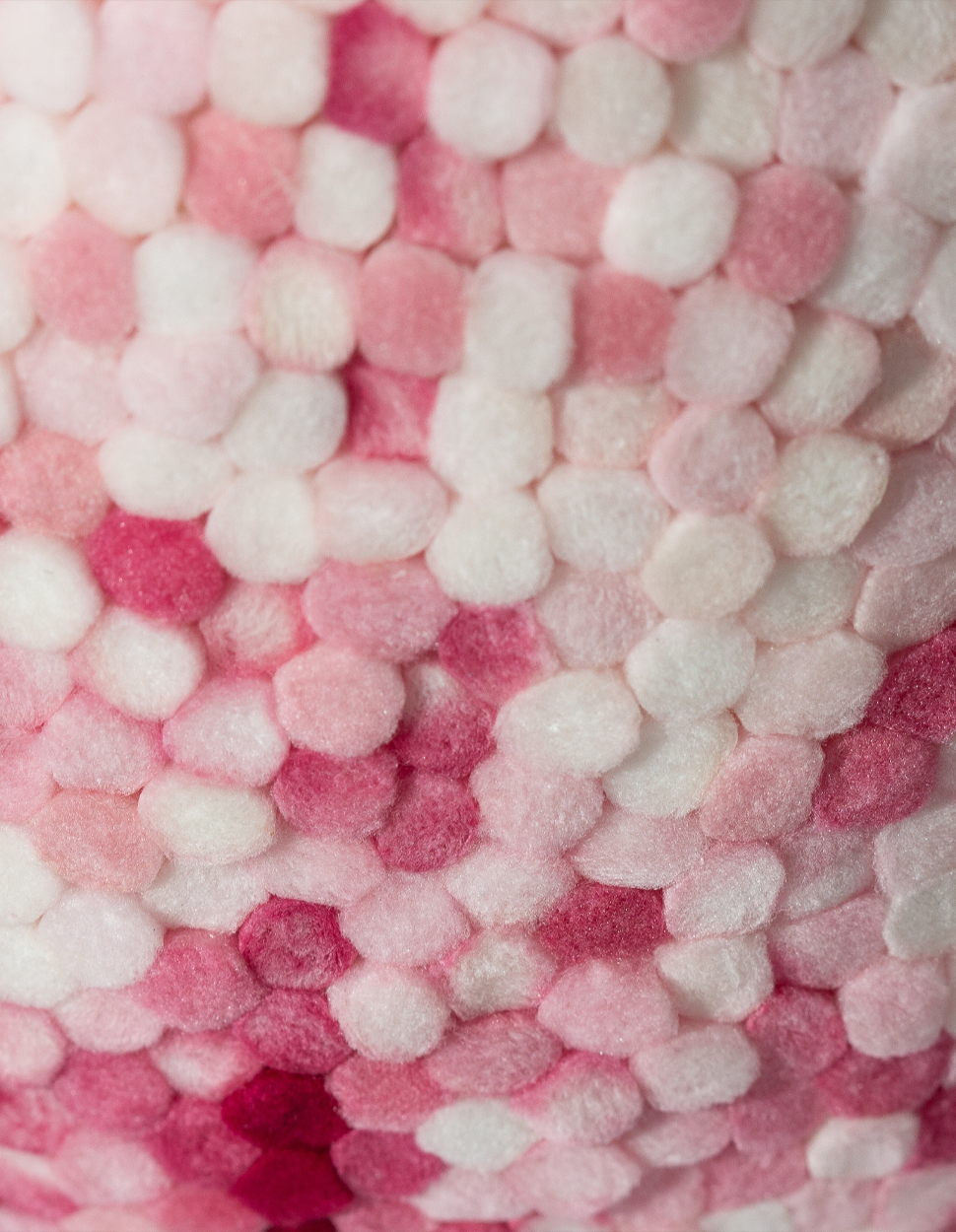
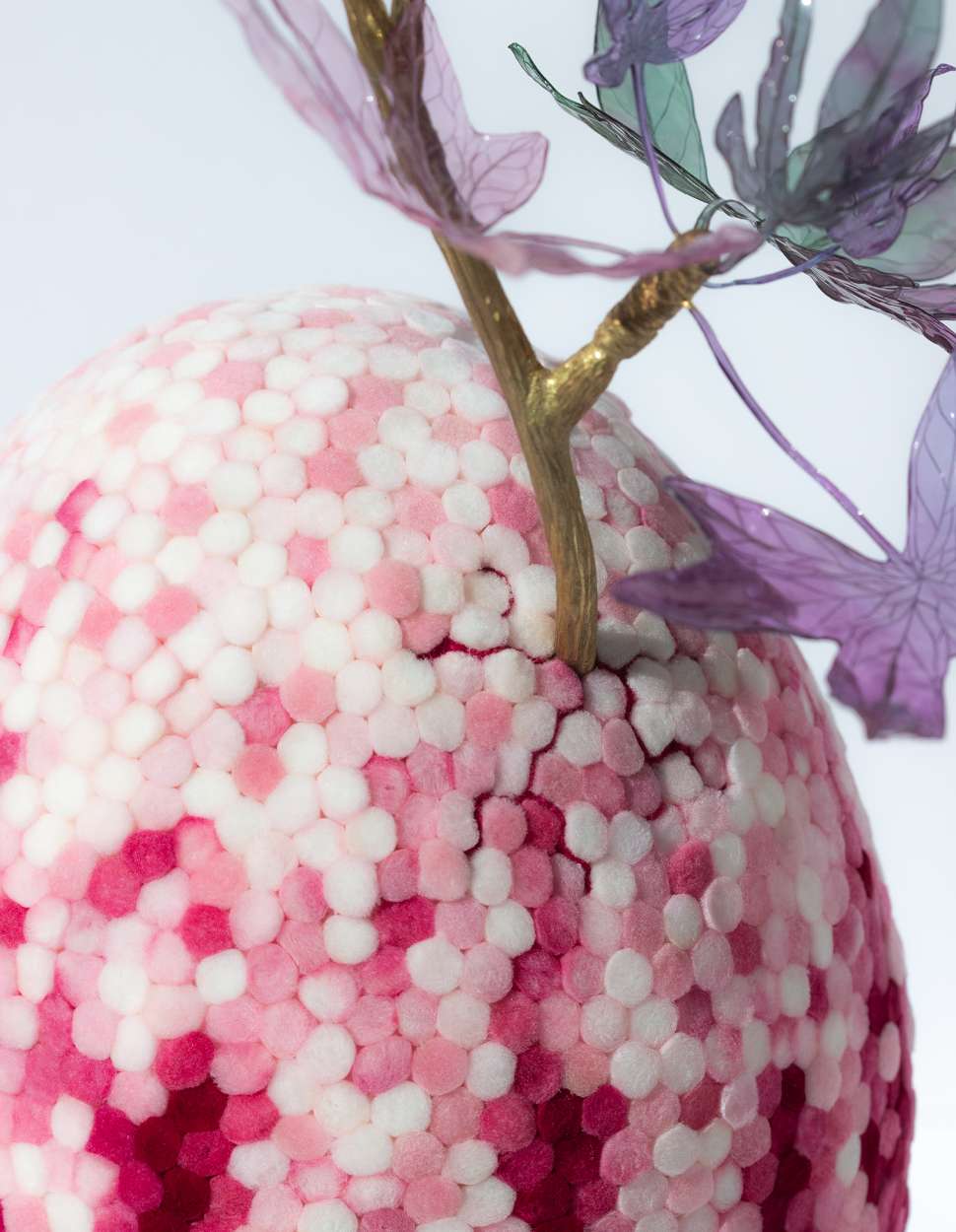
At first glance, Éclosion poétique from William Amor captivates with its soft, almost gourmand chromatics. The eye is drawn to the egg’s surface, vibrant and luminous, composed of an infinite number of pinkish fragments that evoke in turn a precious mosaic, a sweet skin or a crystallized material. The piece seems to offer itself as a festive object – a delicate artifact, an edible treat, in the tradition of Easter ornaments.
But this first, deliberately seductive impression cracks as you get closer. The colorful weave reveals its true nature: a marquetry of cigarette butts, painstakingly collected, cleaned and then tinted in subtle cameos. What seemed light and desirable suddenly takes on an unexpected density.
Beauty persists, but becomes ambiguous – disturbed by the toxic memory of matter.
The simple, archaic volume of the egg is fashioned in papier-mâché from administrative documents and tax forms, in a nod to…
This unobtrusive base places the work in an economy of the real, domestic and familiar, which the artist recomposes to offer a new reading.
This organic base is matched by a finely-worked brass structure: a network of roots, firmly anchored, and a slender branch emerging from the fluffy, barely cracked shell.
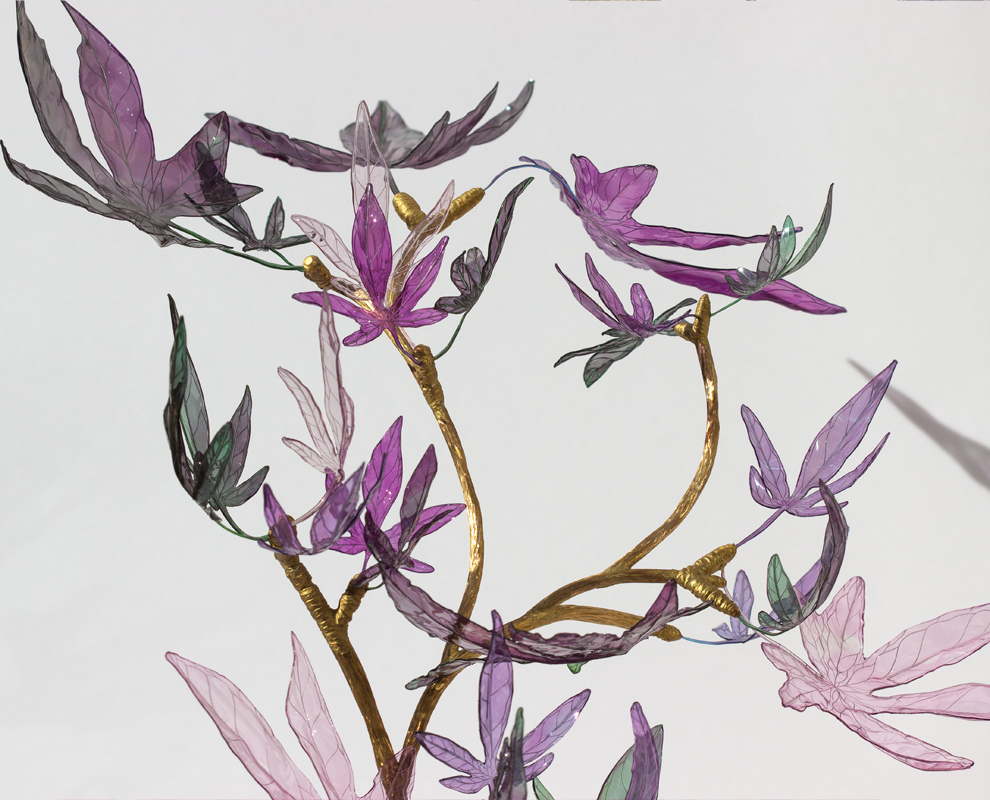
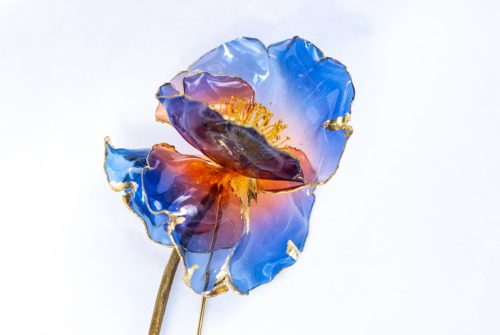
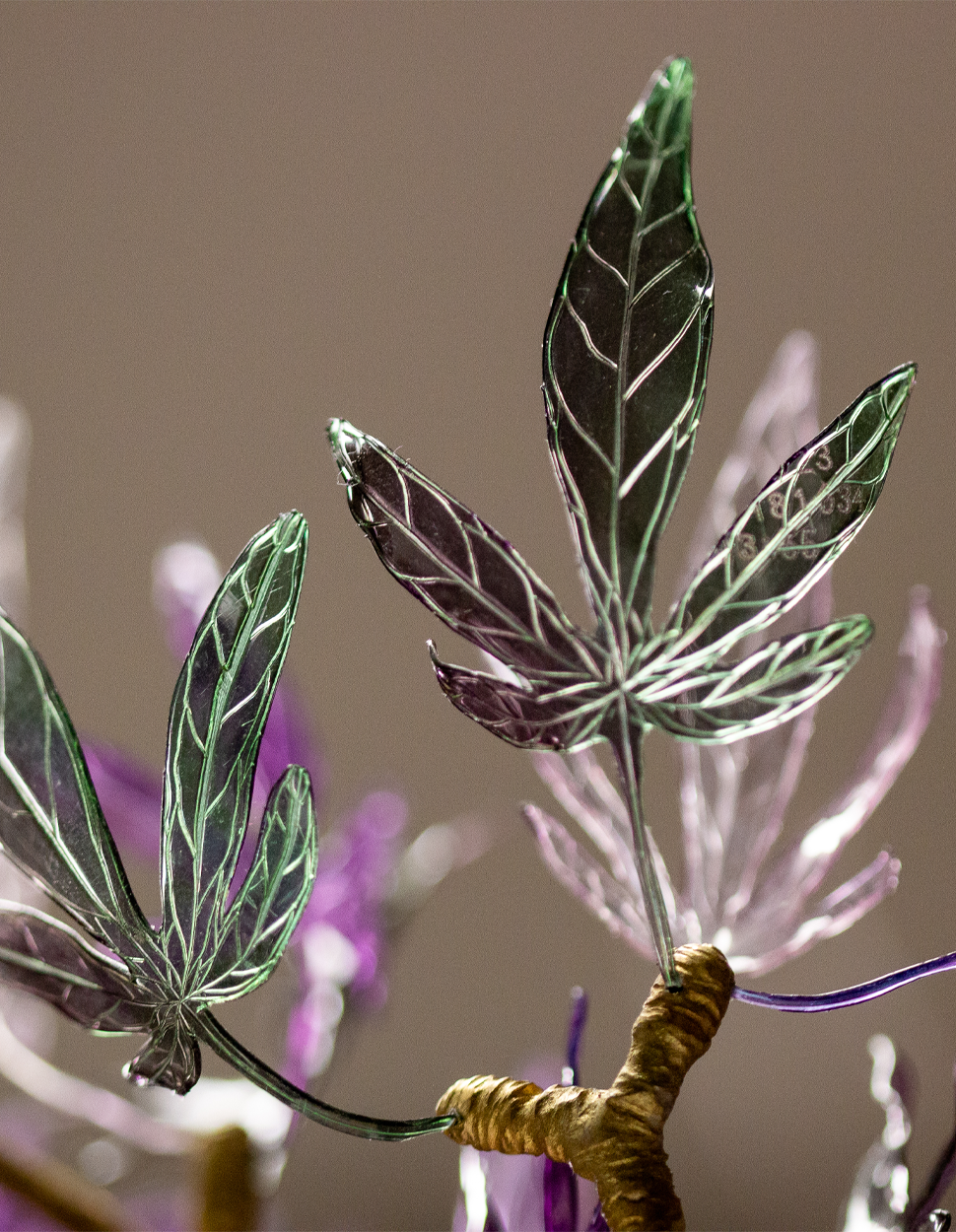
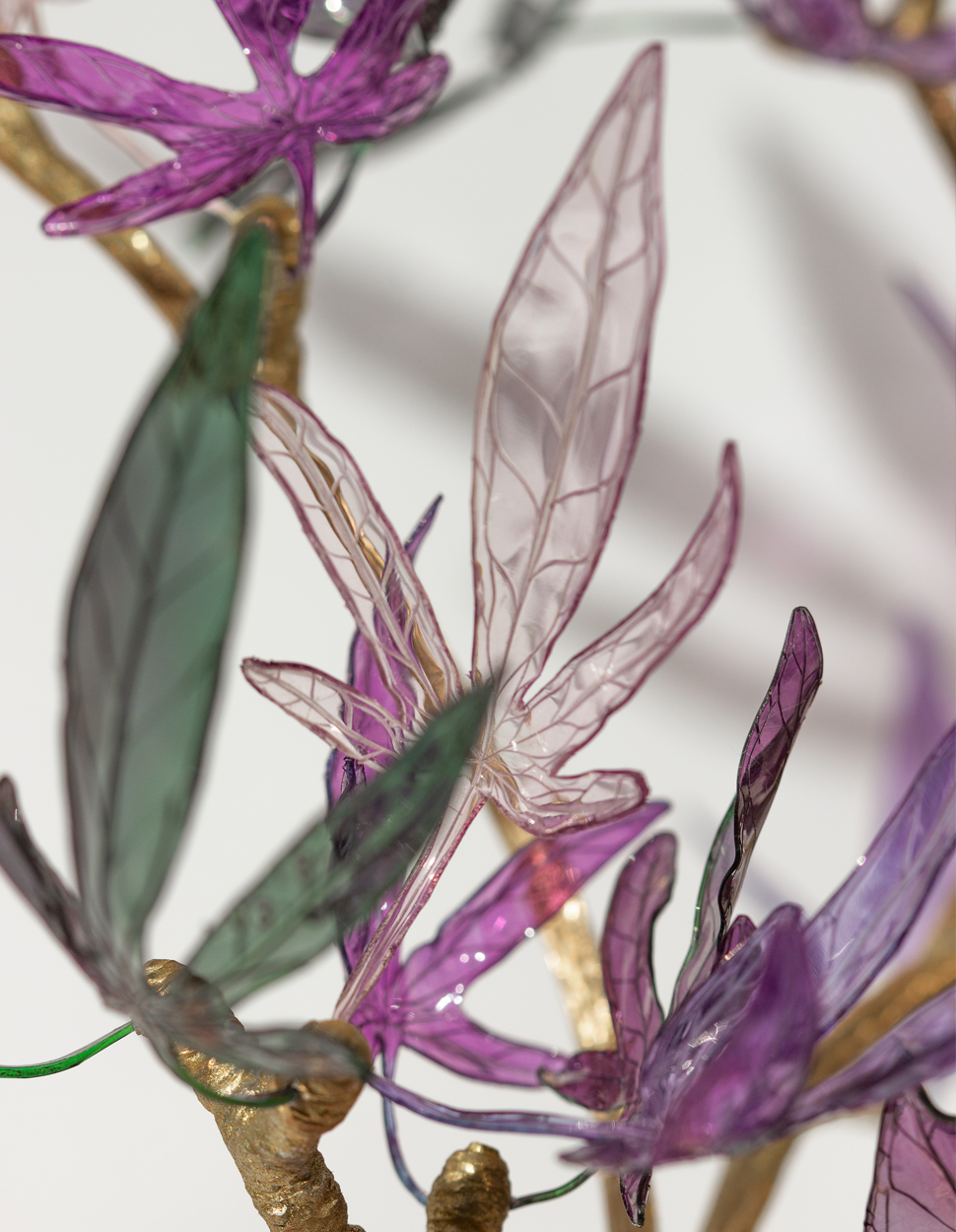
It unfurls in translucent sheets, made from recolored plastic materials, sculpted and engraved in jewel-like fashion. Their shades – from ruby to eggplant, with green highlights – capture the light with a mineral intensity, like stained glass. With their visual lightness, they seem both vegetal and unreal, suspended between nature and artifact.
Beyond its seductive surface, the work fully exists in its vertical axis: the egg ceases to be a simple container to become a veritable germinating seed. From its shell emerges a finely chiselled, textured brass branch, whose growth seems suspended in a moment of blossoming.
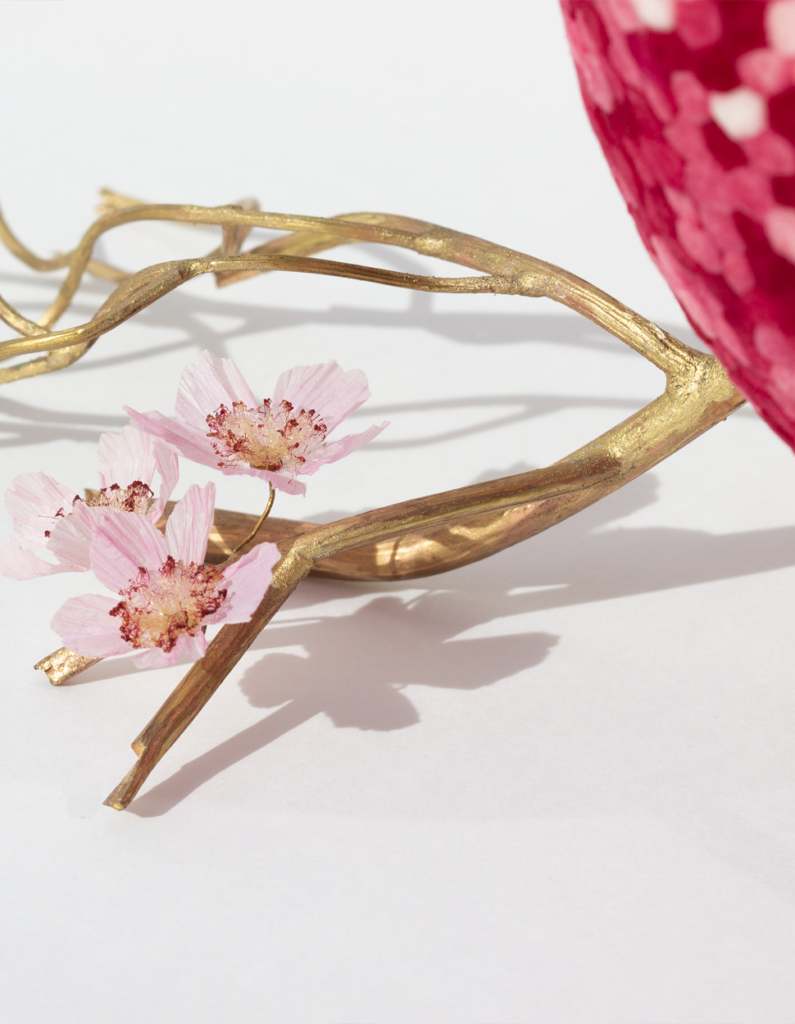
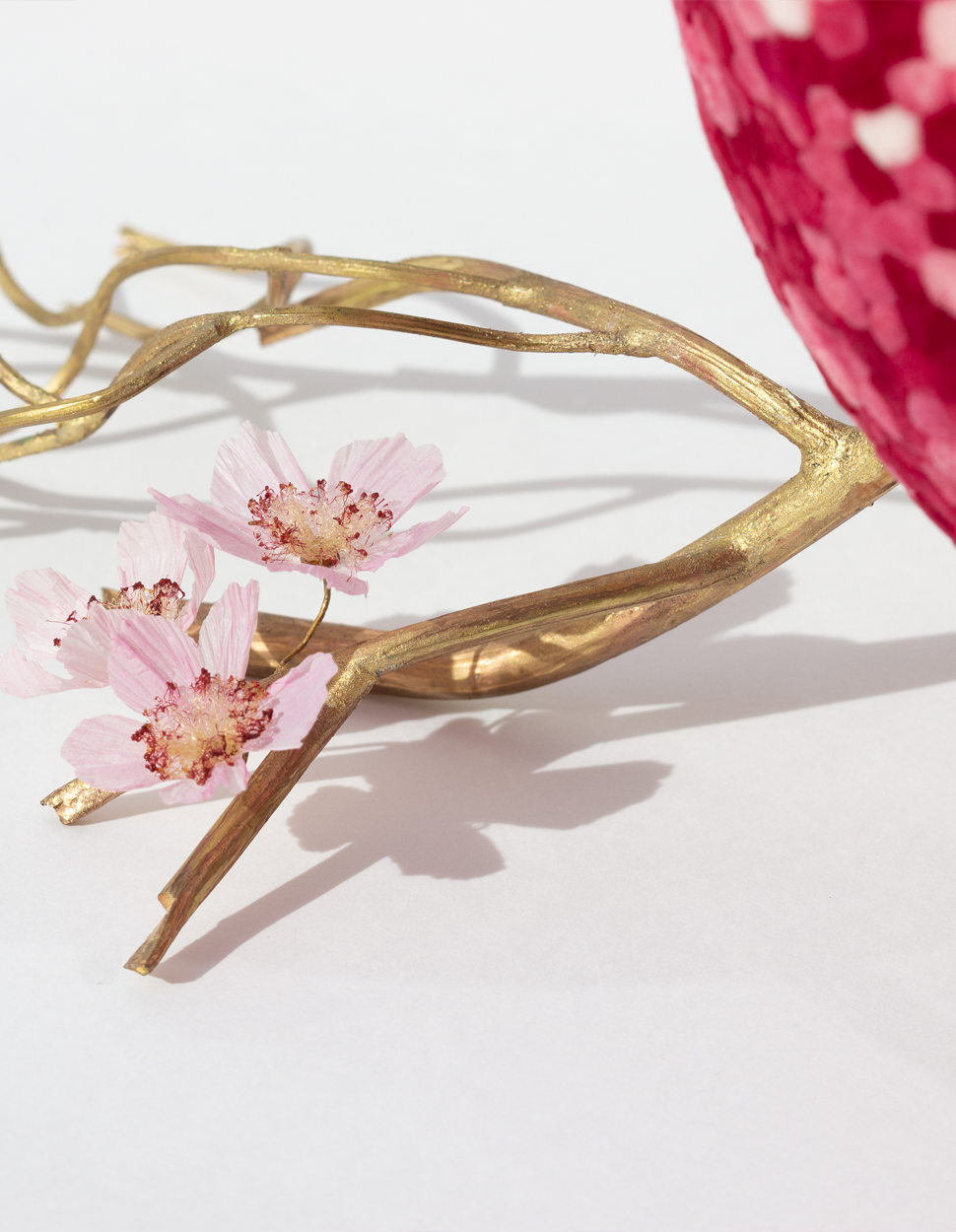
This plant outgrowth – at once fragile in its design and perennial in its material – operates a semantic shift: the egg becomes a seed, the bearer of a potential for life. At its base, a triptych of solidly anchored brass roots affirms this dynamic of germination. They are not merely decorative motifs, but a promise of implantation, an attachment to the soil, almost a symbolic rooting.
Between emergence and anchorage, the work thus articulates a paradoxical birth: that of a recomposed living being, born of waste, but aspiring to a new form of fertility.
Delicate flowers, fashioned from plastic bags and synthetic fibers, discreetly emerge from the roots, prolonging the illusion of recomposed life.
The work is thus organized around a fundamental tension: between seduction and repulsion, between precious illusion and degraded origin.
William Amor makes no attempt to disguise the provenance of his materials; on the contrary, he exploits their full symbolic charge. By replaying the codes of the decorative object, the jewel or the delicacy, he questions our own gaze – our capacity to desire anew what we have initially rejected, neglected, rendered toxic, for our environment, and consequently, for ourselves.
The fruit of over fifteen years’ research into neglected materials, Éclosion poétique is an accomplished synthesis of the artist’s approach.
A work in which metamorphosis is not just a technical gesture, but a displacement of the gaze: an invitation to see differently, without ever completely dispelling the confusion.e.
Dimensions (height and width/diameter)
Width 34 cm x Length 40 cm x Height 54 cm
Weight (kg) = 2 kg
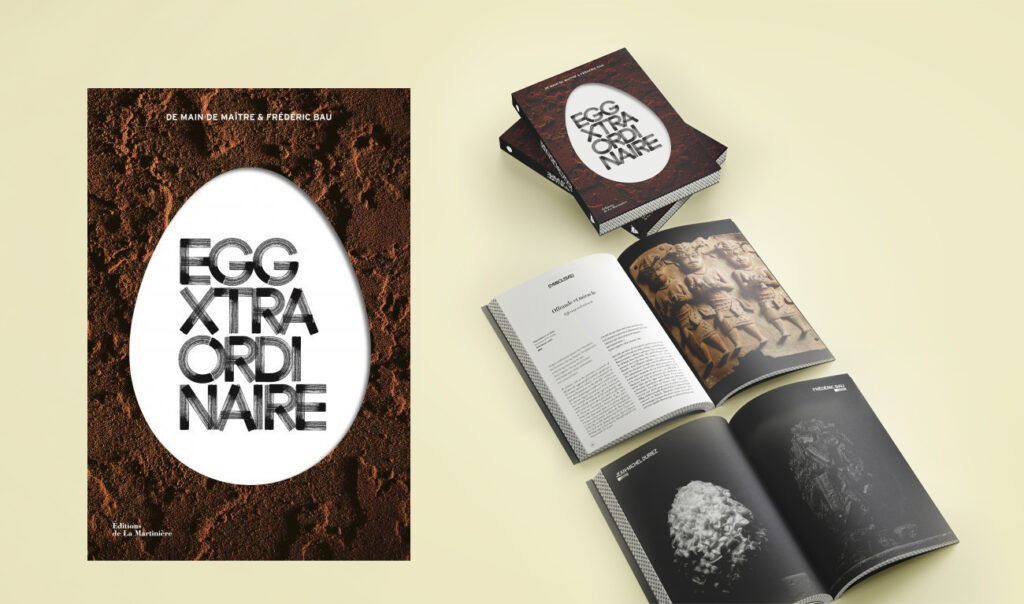
BEAUTIFUL BOOK
Illustrated with magnificent photographs, this beautiful book invites you to discover the fascinating creations of artists and craftsmen such as Florence Lesage, Pierre Hermé, Gilles Marchal, Gwendoline Delcampo…
The first part of the book, devoted to the history of the egg in art, guides you through the ages to explore its symbolism: in turn the receptacle of life or charged with a miraculous aura, the egg is revealed in all its forms and interpretations.
PROJECT TEAM
William Amor, Valérie Henry, Rémy Jarnoux et Marion Le Bellec.