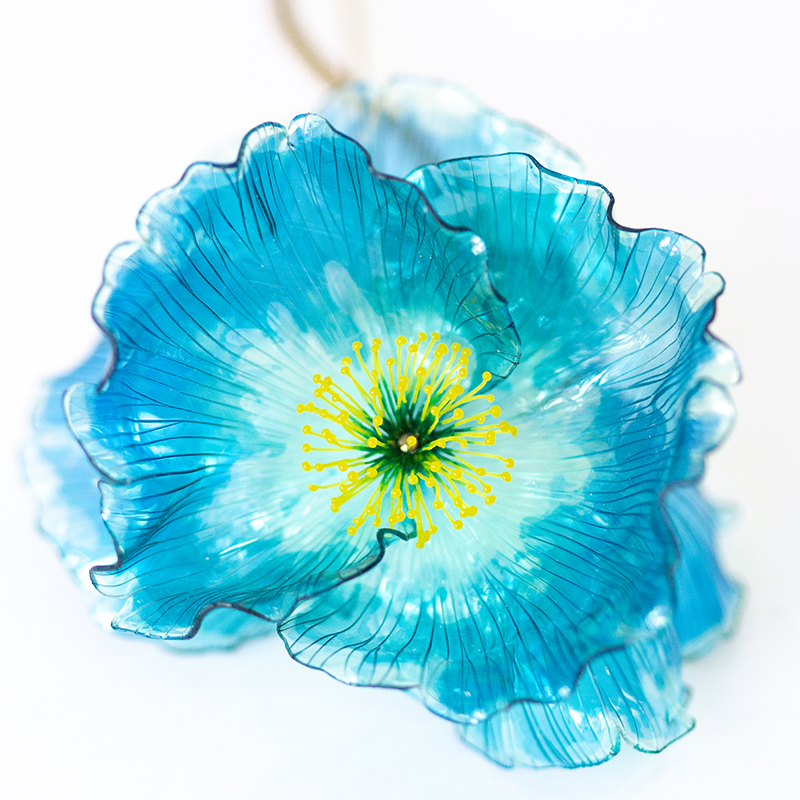
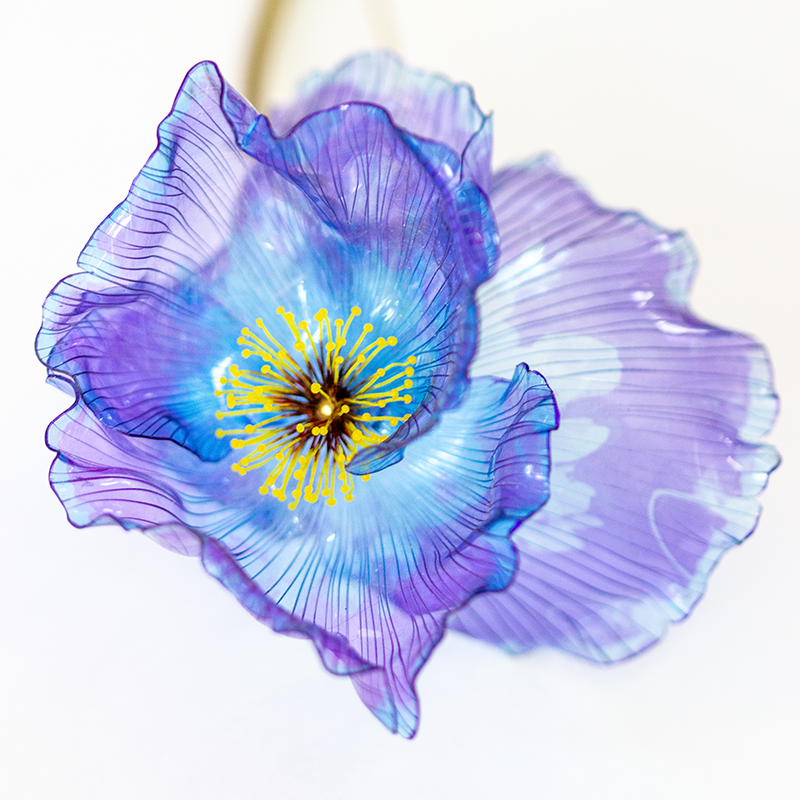
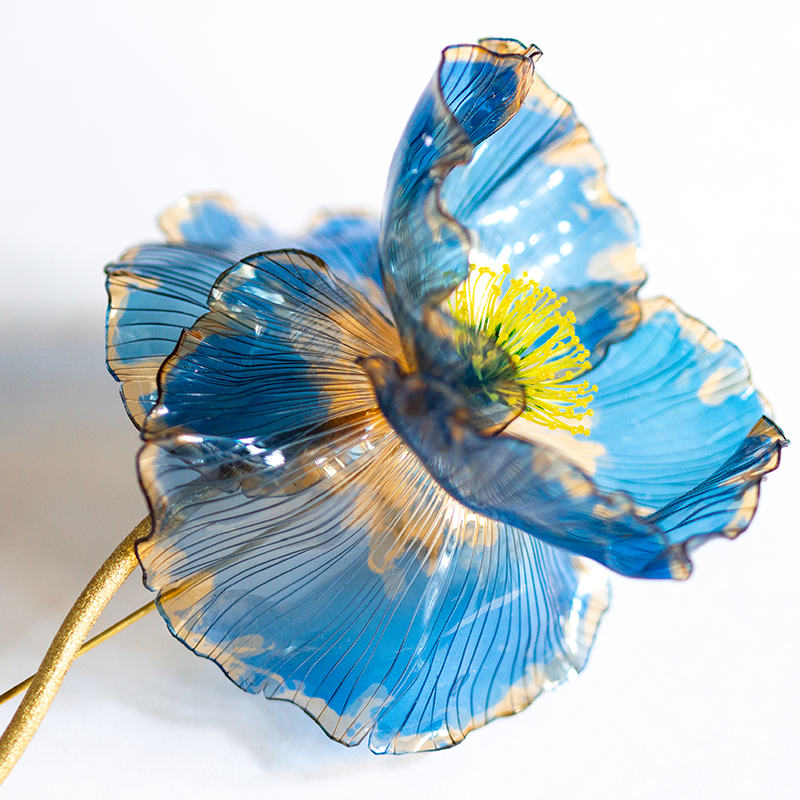
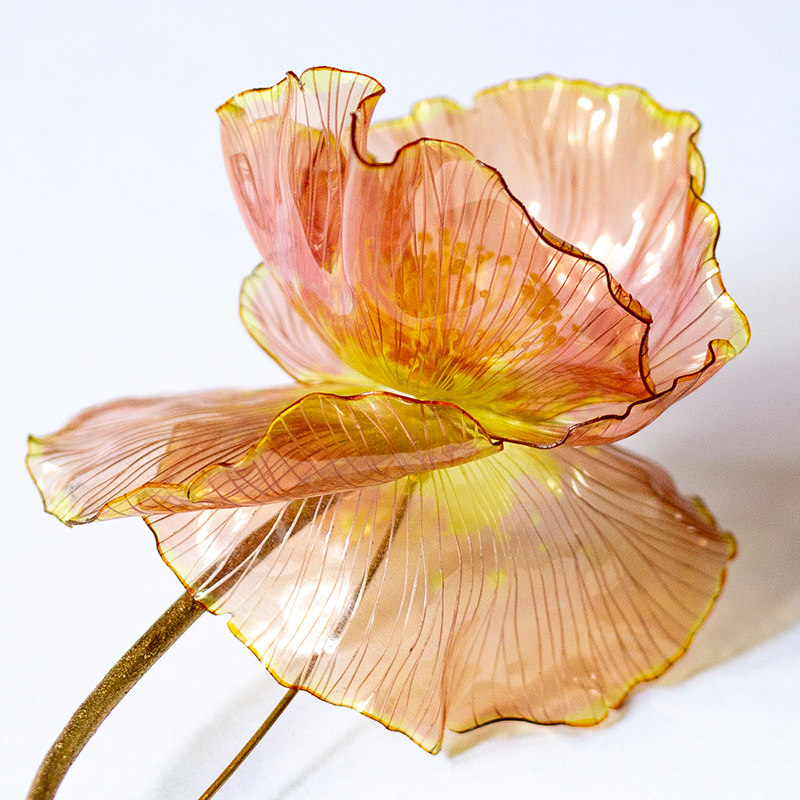
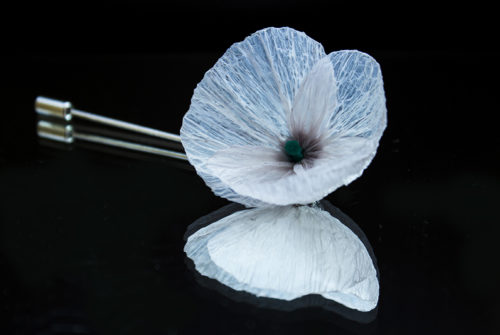
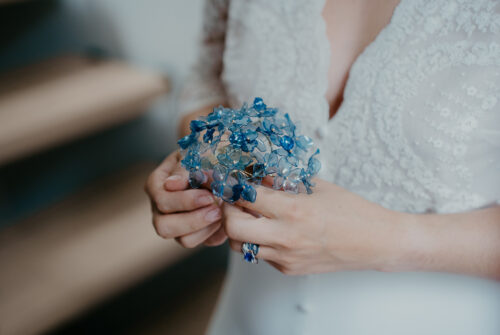
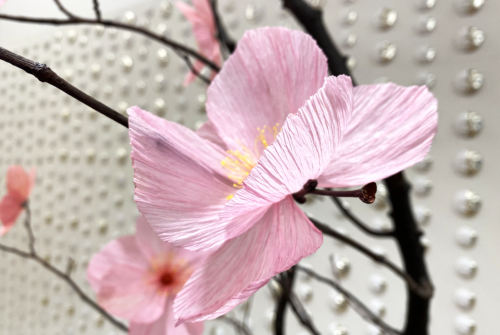
Like rare flowers captured at the very moment of bloom, the iris brooches by William Amor are worn as exceptional jewels.
Delicate, luminous, almost translucent, they appear fragile at first glance—yet their refined beauty conceals an unexpected origin: wandering plastic waste, collected by the artist from the streets, beaches, and natural landscapes.
With these four new art-jewelry pieces, William Amor continues a singular practice at the crossroads of sculpture, fine jewelry, and ecological commitment. Like a lapidary revealing the brilliance hidden within a rough stone, he transforms discarded consumer materials—plastic bottles, abandoned fishing nets—into objects of value, poetry, and desire.
Each brooch is the result of a meticulous process of sublimation and ennoblement of matter. The PET plastic, patiently gathered and prepared by the artist, is dyed, engraved, and sculpted using techniques borrowed from traditional jewelry-making. The heart of the flower, formed from fibers of fishing nets collected on the beaches of the Landes region, is recolored and beaded, bringing a vibrant, organic radiance to the piece.
The iris rises on a brass stem with a golden patina, finished with a fine gold-plated pin, affirming its dual status as both jewel and artwork.
Entitled Precious Papaver (2025, Paris), each brooch is an original work by the artist, entirely conceived and crafted in France—from the collection of materials to the final assembly—and accompanied by a certificate of authenticity and an artist presentation card.
Through these flower-jewels, William Amor invites us to reconsider what we discard, to recognize the grace that may emerge from what is abandoned, and to discover, within the apparent fragility of transformed plastic, a beauty that is enduring, meaningful, and deeply resonant.